


Cyberattack Hits French Blood Bank Freezers Through Supplier
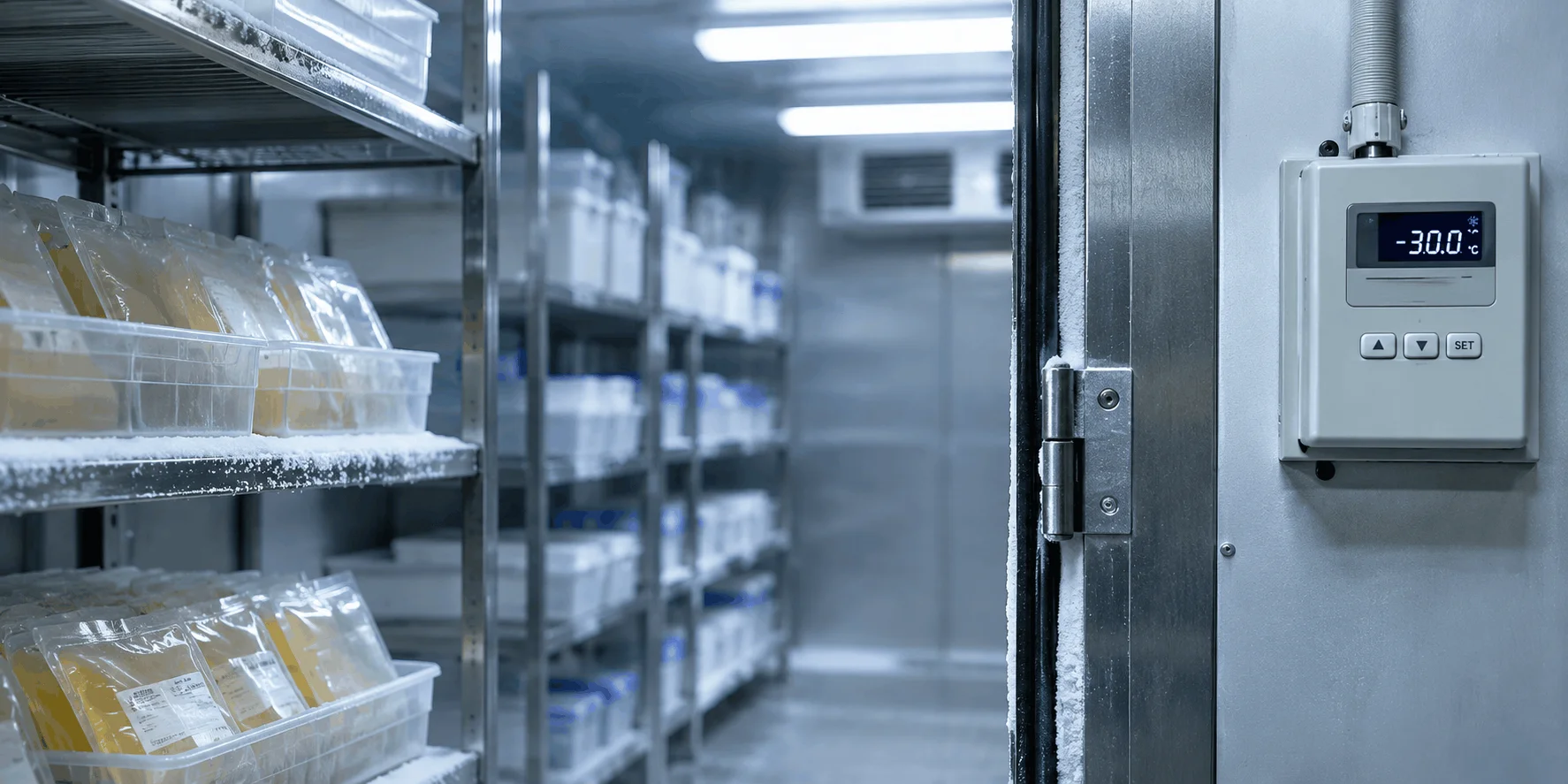
Attackers reached the freezers holding part of France’s blood supply during the night of 1 November. The cyberattack on French bloodbank facilities never touched the organisation’s own network. It arrived through Coolworld, a refrigeration company that maintains the containers and chambers where plasma, donor samples and blood products sit. Alarms caught the changes before anything thawed, and the Établissement français du sang confirmed that no products were lost.
How the Cyberattack Reached French Blood Bank Freezers
Coolworld maintains refrigerated containers and cold rooms for EFS sites, including facilities in Bourgogne-Franche-Comté. Its remote management access became the route into French blood bank storage for the cyberattack. Attackers worked overnight, pushing temperature and defrost thresholds on affected chambers far outside any legitimate operating range. Some units stopped running altogether, while others kept going against new setpoints delivered remotely.
Freezers that normally hold their contents near minus 30 degrees Celsius received a target of 110 degrees. Three EFS cold storage sites took the hit, though the Health Ministry describes the scope more loosely as several regional facilities. ANSSI and the ministry have opened an investigation. Nobody has claimed the cyberattack on French blood bank storage, and no technical findings have been published.
Coolworld says only a limited number of its units were affected and that it moved quickly once it understood the problem. The company attributes the exploited weakness to a component from a third-party supplier, outside its own direct control. Nothing public tests that account, and nobody has explained how the attackers got into Coolworld’s systems to begin with.
Reading the 110-Degree Figure Carefully
That 140-degree swing has carried most of the coverage, so it deserves precision. The figure describes a setpoint written into the control system. It does not establish a measured temperature inside any freezer, sample vial or plasma bag. Nothing published so far says how warm the chambers became or how long the material sat outside its approved range.
Duration is the number that decides the outcome here, because fresh frozen plasma requires storage at minus 25 degrees or below. A brief excursion caught within minutes leaves product viable. Hours would not. The absence of that detail is the largest gap in the public record of this cyberattack on French blood bank cold storage.
What Sat Inside the Affected Chambers
The storage caught up in the cyberattack on French bloodbank sites held three distinct categories of material. Frozen plasma intended for transfusion made up the most critical portion. Plasma destined for the manufacture of medicinal products sat alongside it, together with donor samples retained for transfusion safety monitoring and for EFS biobanks.
EFS first described the exposure as limited to donor samples held for safety checks. A second statement widened that account to include frozen plasma meant for patients. French plasma supplies run tight through much of the year, so a cyberattack on French blood bank reserves feeds straight into hospital capacity. The organisation collects, processes and distributes blood products nationwide, which concentrates clinical risk into a small number of storage sites.
Detection Worked, Prevention Did Not
Monitoring and alarm systems flagged the abnormal readings while the cyberattack on French blood bank chambers was still under way. An on-call technician and overnight teams responded, moving products into refrigerators that sat outside the compromised systems. EFS reports no health consequences and no loss of blood products. Collection and distribution carried on without a pause.
That outcome belongs entirely to the response layer. Every preventive control upstream of it failed. Remote access to life-critical cold storage stayed reachable to an outside attacker, and a setpoint change of 140 degrees passed through with nothing rejecting it as physically absurd. French blood bank sites survived the cyberattack because somebody answered an alarm at three in the morning, which is a thin margin to run on.
A Warning Issued Eleven Days Earlier
French authorities had already described this scenario in public. ANSSI published alert CERTFR-2026-ALE-012 on 12 October, covering compromises of Danfoss AK-SM and AK-SC controllers along with Copeland XWEB and Dixell XWEB units. On 21 October, agency director general Vincent Strubel told the Senate that the supermarket incidents came down to basic failures. He named internet-exposed devices and weak passwords, then extended the warning to healthcare storage for vaccines and other sensitive material.
Eleven days later, attackers hit medical cold storage. No public evidence links the cyberattack on French blood bank equipment to the controller families named in that alert, and the third-party component leaves the question open. But the pattern across both sectors looks consistent. Remote management interfaces built for technician convenience sit reachable from outside, behind credentials never designed to hold against a determined attacker.
The Same Week Across Europe
Supermarkets in Belgium, Estonia, Ireland, Finland, Luxembourg, the Netherlands and Sweden lost refrigeration on the same night. France absorbed a comparable wave in mid-October across up to 700 stores, where some equipment melted or caught fire. Many of those controllers answered to the username ‘admin’ with the current date as a password. Researchers at Forescout count close to 13,000 vulnerable refrigeration systems across 99 countries, and the Pentagon is examining suspected attacks at six military commissaries.
What Operators of Medical Cold Storage Should Do
The cyberattack on French blood bank cold storage leaves every comparable operator with four questions to answer this week. Which controllers manage your chambers? Does any of that equipment answer from a public IP address? Which contractor holds remote access, through what mechanism, and what governs that access outside working hours?
Most sites cannot answer without calling a supplier, and that gap is the finding. Remediation sits at the network layer rather than in a patch cycle. Pull management interfaces off the public internet and reconnect them only through a VPN or segmented network. Replace documented default credentials, require multi-factor authentication for contractor access, and configure firmware to reject setpoints outside a plausible band.
Independent temperature probes reporting to a separate alarm path give you a second signal. That matters when the primary monitoring system is the thing under attack, as it was here. Treat contractor access as a privileged account: time-bound, logged and revocable within minutes.
A Sabotage Model Most Programmes Do Not Measure
No data left the building during the cyberattack on French blood bank systems. Nobody demanded payment, nothing was encrypted, and no stolen records will surface on a leak site. The damage model runs through physical spoilage and patient harm, which most security programmes have no metric for and no playbook to match.
Third-party risk management has concentrated for years on data processors and cloud providers. A refrigeration maintenance contractor rarely appears on that register. Yet the access it holds reaches further into an organisation’s core function than most software vendors ever do.
France walked away clean from this cyberattack on French blood bank storage because an alarm fired and someone acted on it. The next organisation in that position may have nobody awake.
Subscribe to receive the latest blog posts to your inbox every week.