


DigiCert Data Breach Exposed Passports and Customer Records
DigiCert, one of the world’s largest commercial certificate authorities, has confirmed a data breach that exposed archived customer records. The company published its full incident report on 1 November. It traces the exposure back to an infrastructure migration carried out twenty months earlier, in February 2025.
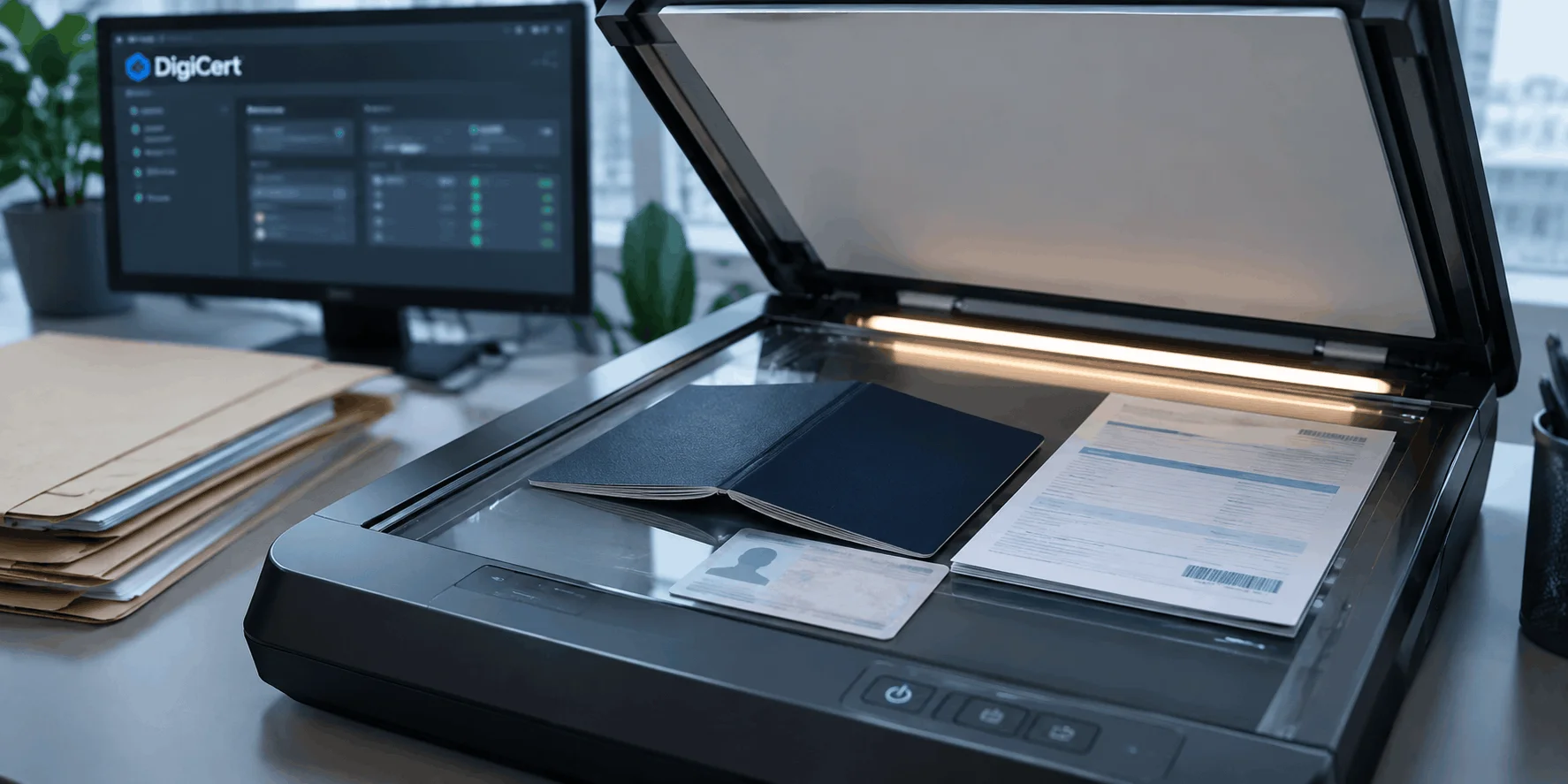
Most of the records exposed in the DigiCert data breach held business contact information: names, business email addresses, phone numbers and addresses. A smaller group of customer accounts contained far more sensitive material. Those records held passports, driver’s licenses and utility bills, each carrying a name and home address.
What the DigiCert Data Breach Exposed
The affected system archives material that organizations hand over when DigiCert validates their identity before issuing a certificate. Customers going through organization or individual validation upload incorporation records and government-issued ID. That archive sat on its own network segment, well away from certificate issuance.
The separation limited the damage, because the account involved in the DigiCert data breach held read-only permissions. It could not write records, approve validations or issue certificates. Log reviews covering certificate authority activity found no issuance, no revocations and no changes to validation records.
Despite the data breach, DigiCert customers face no certificate problem to solve. CertCentral, DigiCert ONE, login credentials and issued certificates all remain valid and fully trusted. Nobody needs to replace or revoke anything, so the exposure sits entirely on the privacy side.
How a Routine Migration Opened the Door
The chain that led to this data breach started on 4 February 2025, when DigiCert engineers moved the business system out of a VPN-restricted segment. They handled the move as an infrastructure change rather than a security change. It never triggered the deeper review a shift in network exposure demands, so a system built for internal use became reachable from the open internet.
Self-Registration Without MFA
The business system runs its own instance of an account manager platform that DigiCert also uses elsewhere. That platform ships with an optional self-service registration flow built for different products, and the migration quietly carried it along. External users could now create accounts on an internal tool, and those accounts skipped multi-factor authentication entirely. The MFA requirement applies only to accounts assigned to an application, so a self-registered account kept default read-only permissions that reached the archive.
Four Months Between the Fix and the Discovery
DigiCert’s own timeline shows that the data breach turned on a single wrong conclusion in June. An internal team spotted non-DigiCert accounts on the system on 18 June 2026. Because none of them had an application assigned, the reviewer decided none could reach data. That reading was wrong, but it shaped everything that followed.
A report from DigiCert’s managed security research program arrived on 21 June, flagging that external account creation was possible. Engineering confirmed it three days later, found the root cause on 30 June, then shipped an authorization patch on 2 July. The hole closed, though nobody yet knew someone had already walked through it.
Investigators later reconstructed a six-day access window running from 27 June to 2 July, ending the moment the patch reached production. DigiCert first suspected unauthorized access on 12 October and confirmed a reportable event seven days later. Reviewing its own response, the company states plainly that it handled the matter as an account-creation issue rather than a data-access event.
Why the Identity Documents Carry the Real Risk
Business contact details circulate widely and lose value quickly, but a scanned passport works differently. The identity documents caught in this data breach give DigiCert customers a far more durable problem. Those documents stay valid for years, and nobody reissues them the way a bank reissues a card number.
Criminals use document scans to open accounts, pass remote verification checks and impersonate the people named in them. A validation contact also holds authority to request certificates. Knowing who fills that role, plus their name and employer, hands an attacker a well-mapped phishing target.
Customer notifications have already started going out across the affected accounts. DigiCert says it is reviewing the documents caught in the data breach before it contacts individuals directly. People whose passports sat in that archive may therefore wait a while longer to hear anything.
The Report Gives No Numbers
The incident report describes the data breach at DigiCert as affecting a small proportion of archived data. It offers no figure anywhere: no count of customers, no count of individuals, no count of documents. The company has offered summary statistics to root program representatives on request, leaving the public disclosure short of what readers want most.
That gap has already drawn a question on the public compliance thread, where a participant asked for numbers on the exposed data set. Attribution looks equally thin, because the report names no threat actor at all. It also says nothing about what happened to the data after someone read it.
What DigiCert Has Changed
Eleven of the thirteen action items listed in the report are complete. DigiCert responded to the data breach by blocking the registration endpoint at its firewall in June, then shipping the authorization fix in July. On 9 July it restricted the business system host names to VPN traffic.
A policy update published on 28 August now requires security sign-off for any change to the network accessibility of internal tools. An external vendor completed a penetration test three days later. Alerts on file access and request volumes went live on 15 October, routed to the security operations centre.
October brought the structural fixes, once DigiCert had confirmed the data breach internally. The company reset passwords, deactivated self-registration across every instance, and moved the remaining externally accessible endpoints onto private-IP load balancers. A named owner now owns the system’s security posture whenever its accessibility changes. Two action items stay open, and both fall due on 6 November.
What Other Organizations Should Take From This
The DigiCert data breach began with a change that nobody classified as a security decision. Moving a system between network segments altered its threat model and switched on an authentication path that bypassed MFA. None of that appeared on a change ticket.
A second lesson sits in the June response to those unfamiliar accounts. A reviewer assumed they could reach nothing, then closed the question without testing it. Four months then passed before anyone checked that assumption against the access logs.
Organizations running internal tools behind a VPN should treat network position as a convenience rather than a control. Authorization has to hold on its own at every endpoint, and monitoring deserves a fresh look whenever accessibility changes. An unexplained account belongs in a log review before anyone decides it was harmless.
Subscribe to receive the latest blog posts to your inbox every week.