


Quest Diagnostics Data Breach Exposes Records in Quanum LSM Portal
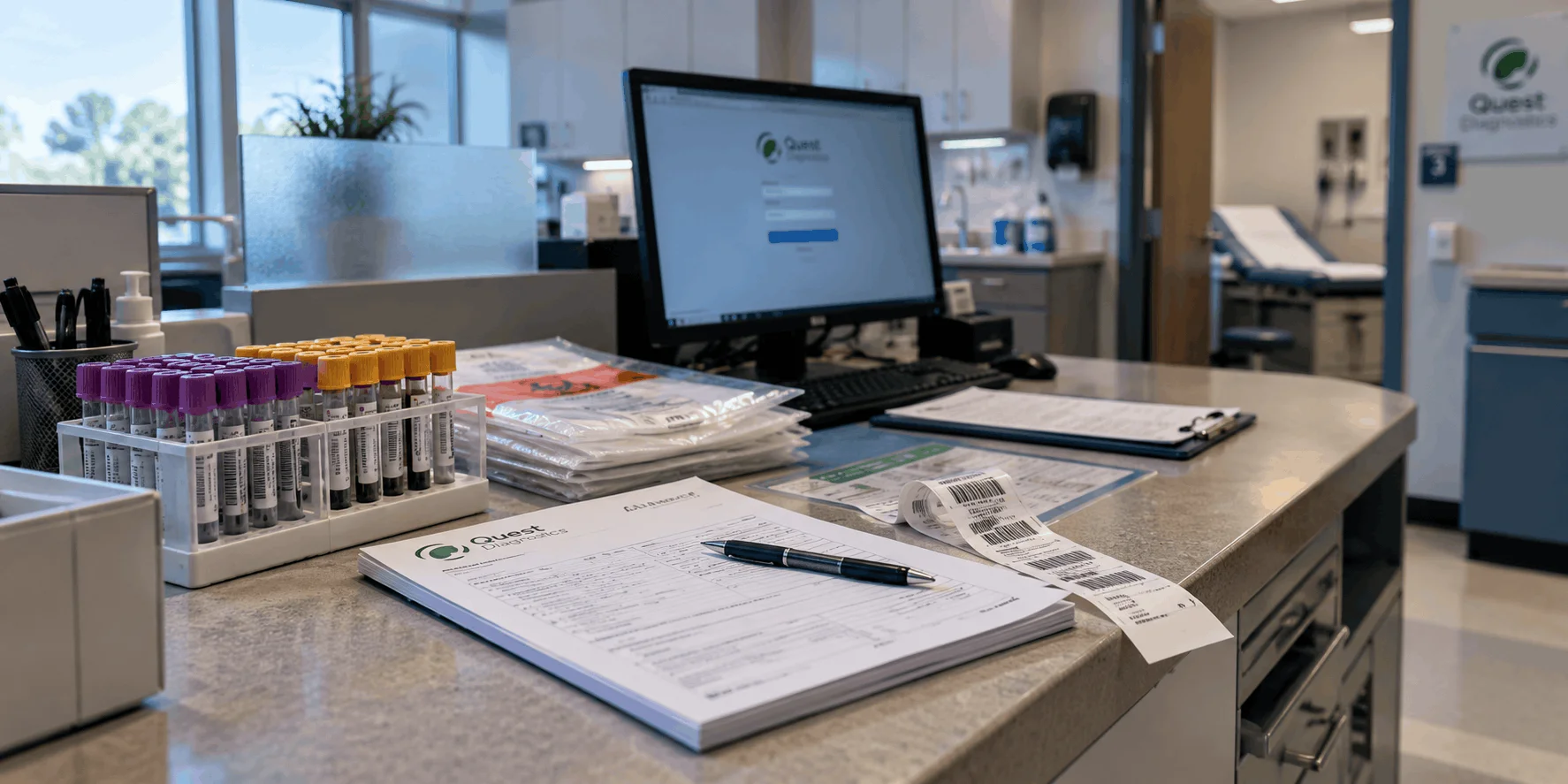
Quest Diagnostics found unauthorized access to its Quanum Lab Services Manager system on October 21, 2026, and told securities regulators about it the next day. The company believes the attacker reached certain patient records. Which categories of data the intruder touched remains undetermined. News of the Quest Diagnostics data breach arrived on the same morning the laboratory operator reported third quarter earnings.
Quanum LSM sits at the center of daily clinical work for the practices that use it. Physicians, hospital staff and medical office teams login to place test orders, retrieve results and track status. Quest pulled the platform offline on discovery and pointed clients to paper requisitions or its separate Quanum eLabs service.
What the Quest Diagnostics Data Breach Filing Actually Says
The regulatory disclosure runs short, and its gaps matter as much as its content. Quest reported that it learned of unauthorized access to Quanum LSM, which certain clients use to place test orders, receive and look up results. It started incident response procedures and began investigating the scope. Federal law enforcement received notification, and outside specialists joined the work.
Two details in the Quest Diagnostics data breach filing carry more weight than the rest. The company believes the intruder reached certain patient records, but it has not listed the data types involved. It also stated that the incident has not materially disrupted operations or its ability to serve patients. That line kept the filing under the heading for other events,rather than the item reserved for cyber incidents judged material.
No criminal group has claimed responsibility for the Quest Diagnostics data breach so far. Nothing has appeared on extortion leak sites, and Quest has not described ransomware or a payment demand. The attack vector stays unknown, as does the dwell time before anyone noticed.
Why the Quanum Portal Is a High-Value Target
Quest runs one of the largest diagnostic networks in the United States, with roughly 7,700 patient access points and about 65,000 employees. It serves one in three American adults each year. A portal brokering orders and results for that volume holds a dense concentration of clinical information, which gives the Quest Diagnostics data breach its potential reach.
Quanum LSM faces outward, and that changes the shape of the risk. Every practice and hospital department with credentials represents another way in, and the laboratory cannot see how well each guards its own accounts. Credential theft at one small practice can open a platform built for thousands.
The Quest Diagnostics data breach follows a pattern that has defined healthcare security for years. Attackers rarely need to break the fortress when a smaller connected party holds a working key, and vendor portals, billing systems and shared record platforms all carry that weakness.
A One-Day Gap Between Discovery and Disclosure
Speed is the most unusual feature of the Quest Diagnostics data breach so far. Quest found the intrusion on a Wednesday and filed with the Securities and Exchange Commission on Thursday morning. Many healthcare disclosures arrive weeks or months after discovery, and some take more than a year.
The timing carried commercial weight too, because Quest published third quarter results that same morning. Revenues came in at $3.10 billion, and the company raised its full year guidance. Its quarterly report, filed days later, lists the incident among the risks to future results.
Fast disclosure and full disclosure are different things, and this case separates them cleanly. Investors learned about the intrusion within a day, while patients still have no idea what the attacker took. The federal notification clock allows up to 60 days from discovery, so the detailed picture may take weeks.
Clients Pushed Back to Paper
Containment of the Quest Diagnostics data breach came at an operational cost for the practices that depend on the platform. Quest stopped Quanum LSM and paused two other systems, Essential Insights and LabHQ, as a precaution. Clients now use paper requisitions or Quanum eLabs to place orders and retrieve results.
Core laboratory operations continued through the disruption, and users of direct customer LIS interfaces and EMR integrations kept working. So the outage took out the ordering layer rather than the laboratory floor beneath it.
Practices caught in the middle inherit obligations of their own, and few are ready for them. A clinic that used Quanum LSM has patients who will ask what happened to their results, and it cannot answer yet. Business associate agreements and state notification rules add pressure to organizations that played no part in the intrusion.
No Link Between the Quest Diagnostics Data Breach and PHP2Shell
Two major security stories broke in the same week, and the overlap has caused real confusion. PHP2Shell, a pair of critical remote code execution flaws tracked as CVE-2026-109618 and CVE-2026-109619, received patches on October 21, the same day Quest discovered the intrusion.
Quest has stated that its investigation found no link between the Quest Diagnostics data breach and those PHP flaws. The portal intrusion involves a system the company operates itself, while PHP2Shell affects web servers running unpatched versions of the language. Both still need handling, because the response to each one looks different.
A Third Incident in a Decade
Quest has been here before, and that history will shape how this one gets judged. In 2019, a breach at billing collection provider American Medical Collection Agency compromised data belonging to roughly 11.9 million Quest patients. At least 19 class actions followed, and the consolidated litigation remains unresolved.
An earlier incident in 2016 exposed lab results and contact information for about 34,000 people. The 2019 case started at a third party, while this intrusion reached a platform Quest runs itself. That difference gives the Quest Diagnostics data breach a sharper internal edge than the 2019 case.
What the Quest Diagnostics Data Breach Means Next
Several questions stay open, and the answers will set the real scale of the Quest Diagnostics data breach. Investigators need to establish how the intruder got in, how long they stayed and how many people the exposure covers. Quest has committed to notifying affected individuals once it knows.
Patients who used Quest recently have no specific action to take, because nobody has confirmed what the attacker accessed. Watching for unexpected medical bills, benefit statements for care that never happened and letters from the company remains sensible. Practices on Quanum LSM should document the outage and keep a fallback ordering process ready.
Quest Diagnostics moved from discovery to public disclosure of the data breach in a single day, and the next phase will move far slower. Scope determination takes weeks at this size. The figure that eventually lands in the federal breach portal will tell the story the filing could not.
Subscribe to receive the latest blog posts to your inbox every week.